An X-ray is a type of energy that passes through soft tissue and is absorbed by dense tissue.
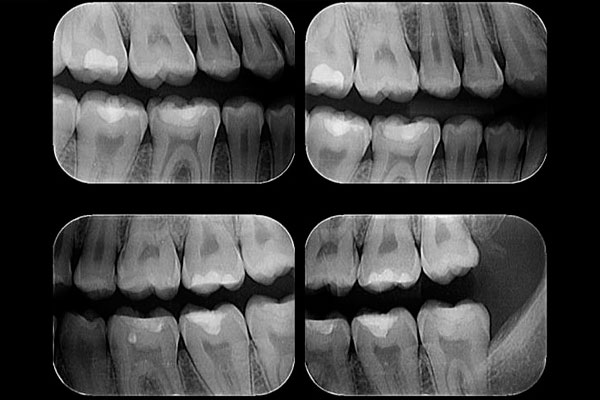
Bite - wing x-ray
Provides a view of the upper and lower back teeth. This type of X-ray shows the dentist how these teeth occlude
Cone beam computed tomography (CBCT):
A special type of X-ray machine used in situations where standard dental or facial X-rays are not sufficient. This technique is not used routinely, because the exposure to radiation from this scanner is significantly greater than that of common X-rays.
Controlled area
Requires specific measures radiation protection and safety to control exposures and the scattering of radiation.
Deterministic effects
They relate with a certain threshold of dose to damage the tissues; this means that lower doses at that threshold they will not generate effects biological.
Digital X-rays
Set of techniques to obtain scanned radiological images in digital format.
Elongation
When the radiographic image is larger (longer) than the radiographed teeth.
Extraoral X-ray
Is taken outside of the mouth.
Gamma rays
They constitute a type of ionizing radiation capable of penetrating matter more deeply than alpha and beta radiation.
Gonadal protectors
Protective shield on the outside of the body to cover the area of the gonads and other parts of the reproductive system during radiation therapy.
Horizontal angulation
It refers to the location of the tube and the direction of the central ray in the direction of the horizontal plane, (from side to side).
Infrared
Type of electromagnetic radiation, longer wavelength than visible light.
Intraoral X-ray
Is an X-ray that is taken inside the mouth.
Ionizing radiation
Is it so made up of energetic particles like photons, protons, electrons and others that interact with cells of body tissues storing partially or totally your energy, which can alter the molecular structure of the cells
Lead apron
It is a protective blanket, made of lead and rubber, for the patient, the radiologist during exposure to X-rays or any other diagnostic or therapeutic radiation
Non-ionizing radiation
They are those without enough energy to displace bonded electrons to the atom.
Occlusal x-ray
Provides a clear view of the floor of the mouth to show the upper or lower jaw bite. This type is for children's teeth to show the primary and permanent teeth.
Panoramic x-ray
It shows a view of the teeth, jaw, nasal area, sinuses, and jaw joints.
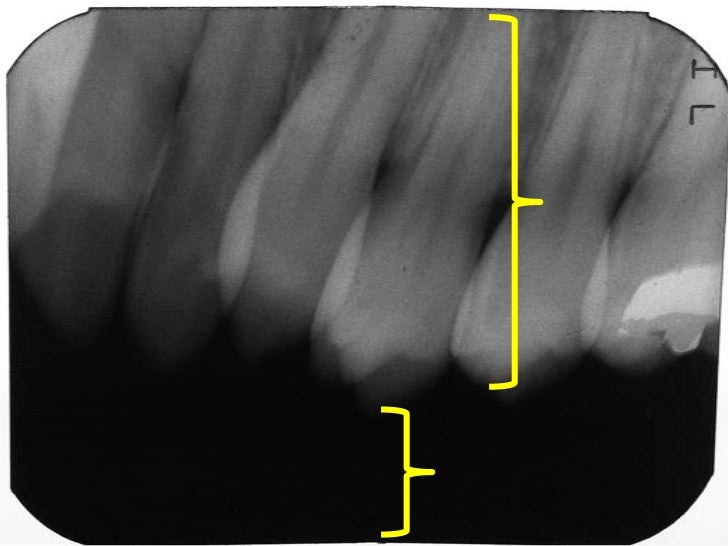
Periapical X-ray
Provides a view of the entire tooth, from the crown to the bone that helps to support the tooth.
Phosphor plate
Metastable plate, used to record a two-dimensional image of short wavelength radiation
Primary beam radiation
Direct or primary radiation is called radiation that emerges from the X-ray tube in the direction of use, that is, that used to x-ray the patient.
Radiation
Energy propagation emitted in the form of electromagnetic waves, which have influence or not in the atomic structure of matter.
Radiation protection
In barriers or protective shields, it is considered two types that decrease primary beam radiation.
Radiolucent
They are soft tissues and therefore allow the passage of light. It is all that body that is passed through by radiant energy.
Radiopaque
It is a structure that does not allow the passage of X-rays or other radiant energy.
Roentgen
Old unit used to measure the effect of ionizing radiation. It is used to quantify radiometric exposure.
Stochastic effects
Determined dose threshold for damage to some tissues. They can be produced with any dose, low or high sea.
Supervised área
It is one in which circumstances operating conditions are kept under observation, but no procedures required specials.
Tomography
Series of x-rays taken from different angles around the body and uses computer processing to create cross-sectional images.
vertical angulation
The central ray is directed perpendicular to the film and to the longitudinal axis of the tooth, the placement of the cone goes in a vertical plane.